Watermelon and Cheese
  • Home
  • Download
  • Social
  • Features
    • Lifestyle
    • Sports Group
      • Category 1
      • Category 2
      • Category 3
      • Category 4
      • Category 5
    • Sub Menu 3
    • Sub Menu 4
  • Contact Us
It's safe to say that a important component of Caribbean cuisine is a good fried dough. With names like bakes, floats, johnny cake, festival, fried dumpling you could imagine the confusion when crossing regional borders and having to order breakfast.


Chinese keep it simple. It's directly translated as Oil Stick 油条 which brings to mind a steel pipe covered in old car grease. But don't let the Chinglish scare you. It's actually much more appealing than this.


As you can see from the texture, it's a bit more chewy and puffy especially if cold. This comes from the proportions of flour and water (the dough is very wet when made) and the use of oil instead of butter or lard that Caribbean natives may be used to. It is also very light on salt.


Unlike in the Caribbean, I have never been served this at home. But it is extremely popular at our cafeteria and on the street with rice porridge, boiled or fried egg and pickled vegetables. But only for breakfast. I usually go for a simple steamed bun so this seems to be for those who need a heavy, hearty meal to keep them through the day.

Breakfast from the Cafeteria

When my mom fried bakes at home, I was known to make up to 20 disappear in one sitting. Ours are the flat disc-shaped ones and size was never an issue but you won't catch me eating so many oil sticks now. I mean it's not like Moms is hovering over the bowl waiting to slap away my impatient fingers...but... There is no salted cod here, at least any that appropriate for souse or fish cakes. The last time I smuggled carried some was like a year ago when I tried to fit the whole of Grenada in my suitcase. And what is bakes without salted fish?

Honourary Fish Cake

However, recently my palette has shown signs of softening up, so don't be surprised if you see some new combinations in the near future.


What are your favorite side dishes to bakes, festivals and fried sticks? Let me know below.


I remember when we moved into our new house in the hills and I was helping out with the designing and decorating. When it came to the dinner table, I decided to go with the round one. I figured, rectangles, been there, done that. By the time we installed it, some unexpected advantages or disadvantages, depending on how you look at it, showed up. Due to the longitudinal nature of our legs and the central placement of the table's, things got intimate real fast. Great for family dinners, kind of weird for guests.

Either way, encountering a round table in China is common in most households and restaurants. And for many more reasons than intimacy. Today, however, I want to look at the restaurant setting a bit.
Table before setting
Table after setting

Remember in China, many dishes are eaten at one time. So having a round table like above, especially rotating ones, allows everyone to conveniently enjoy their dish of choice. A table like this can host up to 10 people and 20 dishes at one time. With so many diners though, you would fare better playing Wheel of Fortune than guaranting that the dish you want doesn't show up on your side of the table empty.

Meats are always served first, usually cold dishes 凉菜 following by hot dishes. There is no limit to the types of meat offered. Yes, I have knowingly eaten frog. No, I have not knowingly eaten any member of the Canis lupus family and have no intention of doing so.


Cold dish of sliced beef and cilantro

Hot dish of beef, mushrooms and
fried pigeon egg soup

Stir-fried vegetable dishes and soups slowly start trickling in to aid with meat digestion. Thinly sliced potatoes 土豆丝, garlic shoots 蒜菜  and steamed pumpkins and yams are some of the general favorites. Up north you may be offered cute beef wraps. In Sichuan, most definitely expect some Mapo Tofu 麻婆豆腐。It's fresh tofu and minced meat flavoured with bean sauce 豆瓣, chili pepper 辣椒 and presently much appreciated prickly ash pepper 花椒。

Mapo Tofu 麻婆豆腐

Remember I said that there's always something to surprise me in the world of Chinese cuisine. On this particular occasion, my new friends ask me if I have ever eaten grass. I immediately thought that numbness from all the 花椒 I had be eating in the 麻婆豆腐 had somehow hit my brain. They asked me again and soon the waitress bought out this dish.

Raw edible Chrysanthemum leaves 茼苞


They begged me to eat it, persuaded me that it was a special feature of Sichuan cuisine. But all I could think was that I hit an all time low. I had eaten grass. I must admit that the accompanying sauce had a beautiful sweet, tart flavour, light citrus notes...yummm...but this doesn't change the fact that I ate raw grass.

Now it will probably be about 30 minutes into the meal and you would have seen lot of dishes spinning around and around the table. Plates becoming empty and being replaced with more innovative dishes than before. But all you really want is some rice. Where is that rice? Well how do I defend this? The point of a round table meal is not to become stuffed up on starch but to enjoy the different flavours and cooking styles presented by the chef. When you think about it, rice can be quite a distraction, because if you eat it quickly, there won't be space for anything else. (Not even I can be convinced with that little speech). So the rice is served last. And in some cases, like my recent Chengdu experience, not at all. I waited, while sadly picking at long-empty dishes and not a white fluffy grain appeared. But I should have known when I saw the fried peanuts and sliced fruits. They are always the last dishes served.

Almost forgot the beverages. When eating at home, drinks are pretty much ignored until after the meal. On the other hand, when eating out, tea is obviously the drink of choice; preferably buckwheat tea because of it's light, clean, slightly sweet flavour. Soda and orange juice are also available. Can some one tell me why it's always Tropicana juice?  If we are celebrating, let's say, a visiting foreigner in the midst, or something actually important like Spring Festival, you can expect baijiu 白酒, wine and nut milk to make an appearance. No cup touches the lip without a toast of some kind. Towards your neighbour or the whole table, doesn't matter, but has to be done. I sometimes find myself toasting just so I could keep my throat lubricated.

After the meal, those with heavy bellies roll out the door and those who thought they would be the first to ever outdo baijiu stagger out under the starlight black sky in search for a nearby KTV.

Do you think you have the stamina to endure a Round Table dinner or lunch? Let me know down below...

Tea, as most of you know is a staple in Asian culture and milk tea even more so. Forget coke and fanta. Grab me a bottle of tea!

Part 1 of local supermarket shelf

Part 2 of local supermarket shelf...the same shelf

Matter of fact, juice bars are making mad profits from this culture wave. My block has at least 10 juice bars, with the only competition being the 9 hair salons in between.


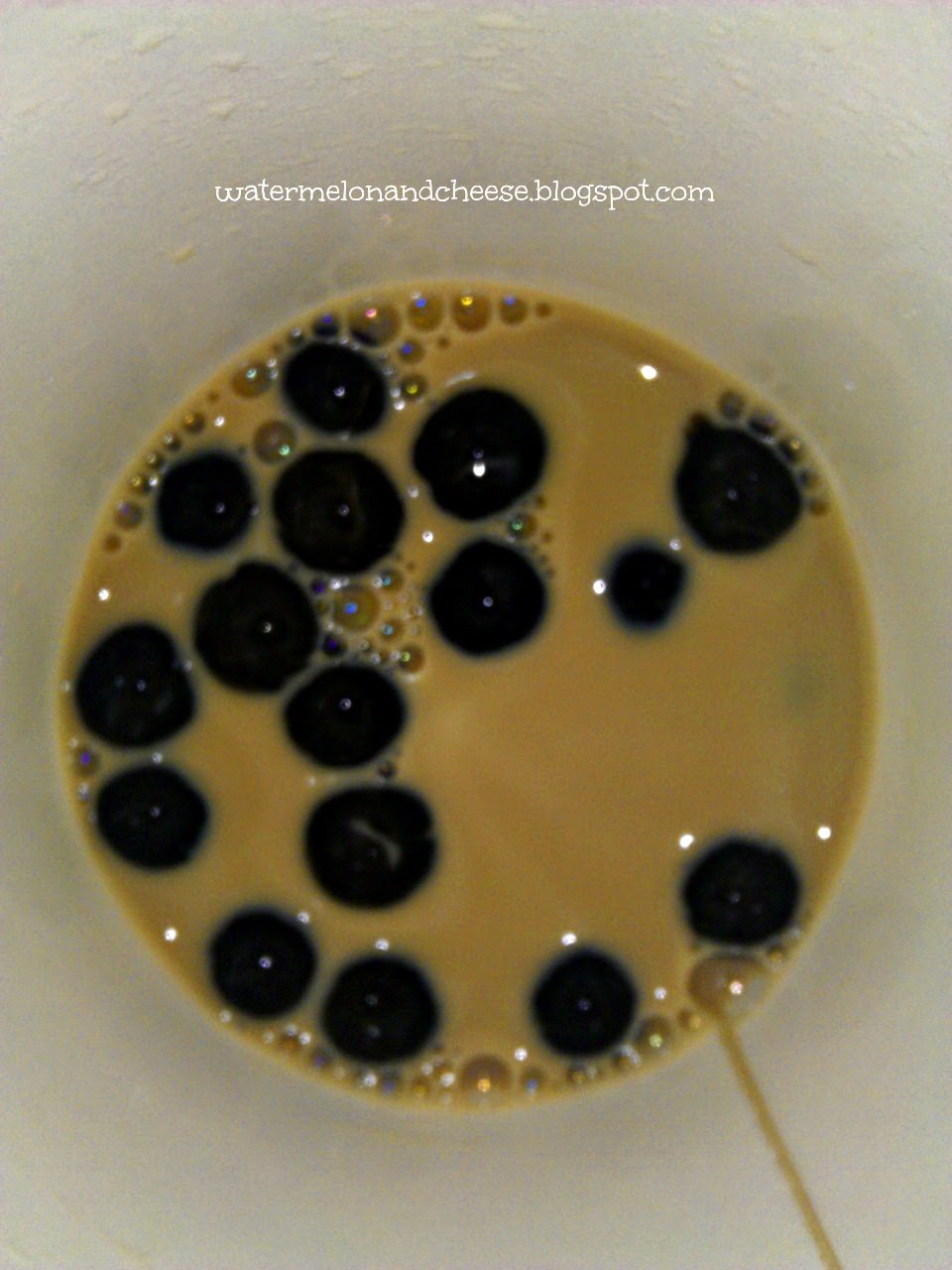
And the main item for sale is Milk Tea. It's black tea, the Lipton looking one, (they call it red tea 红茶 though) mixed with milk and sweetener, be it honey or sugar. To keep it interesting, floaters such as pudding, red beans, cake, oreos and whipping cream and ice cream are available, but it's the sinkers that I love. Behind door number one, black pearls or bubbles or boba.


They are made of tapioca (yay cassava!) and sometimes a little red bean paste. They're chewy, googy and a balance to the sweet, creamy tea. At first, I thought it was inedible and just for decoration but then they wouldn't stop climbing that fat straw the guy gave me. Hot or cold they are available all year round which is where it beats soda. Because unless you're sick, you're not drinking a hot coke.

Although it started in Taiwan, I read it's a craze all over the world. Wonder when it will hit the Caribbean?! Definitely looking forward to that day!

Peeled Chestnuts
What lives under ground, looks like a nut, tastes like a pear-potato mash up and is really good for you? Ding ding ding......Chinese Water Chestnut or Horse's hoof or which ever of the 100 local names you guessed. Nut is just a moniker. It's really a tiny corm that is grown in those muddy patches you get your boots stuck in. Once you dig them out, cut off the shoots, wash in cold running water to get all the mud out, peel and remove the crown, it's ready to eat.

When choosing the perfect chestnut, the skin should be red-brown. The best tasting ones are available between the Winter Solstice and it's peak period. Basically, the time when I'm busy hibernating. Spring chestnuts contain more water (not as sweet) and are identified by their dark-brown skin but no need to worry; they're 还可以 (ok).

For the most part it's eaten raw, however, it can be stir-fried with veggies or boiled but the latter isn't as tasty. Personally, I prefer them raw to obtain all the nutrients possible. We're talking Carotene, Vitamin A, B, C and E, Iron, Copper, Phosphorus, Potassium, Sodium, Magnesium, Selenium, Manganese. In addition, there's 0.2g fat and 1.2g protein per 100g. It is kind of heavy on the starch and fiber side being a corm all, so this is more of a daytime snack.

In Chinese medicine, it aids digestion (fiber), quenches thirst (water), increases metabolism (Phosphorus) and detoxifies (bucket load of macro and micro minerals) . It is a cooling food which means it's used to cure heat related diseases such as fever, jaundice, and inflammation. Recent research has revealed that it contains anti-bacterial properties which inhibit the effect of Escherichia coli and Staphylococcus aureus.

This super-food is still available so grab a few and incorporate it into your diet in between meals. For safety reasons, purchase from trusted vendors or supermarkets. Since chestnuts are cultivated in swampy areas, the risk of chemical and other toxic contamination increase.


2 layer Hot Pot: Safety inside, fire outside.

In Chongqing, the city of spice and 麻 (numbness), yin and yang come into play and save the day. Eating hot pot is always accompanied with drinks of some kind. Coca Cola, orange juice and bean milk for the kids,  local beer for the after work lime and bai jiu (Chinese white liquor) for those who have mislocated their nerve endings. However for the first timers, not so often-ers and the 'never will get accustom-ers', this particular drink can prevent bruised tongues and bruised egos. Imagine diving into your hot pot, underestimating the waves of pepper before you but despite the danger, you don't want to leave just yet. Wang lao ji is the banana boat that allows you to keep the fun and thrill all at once.
Wang lao ji is a natural plant beverage with the ability to 'remove' heat from the body. All it needs is a super-hero endorsement. The mixture is made up of Mesona chinensis*, common frangipani, Microcos paniculata*, chrysanthemum, honey suckle, Prunella vulgaris*, and licorice root along with water and sugar. The healing properties of these plants include removing heat as mentioned, regulating the liver and kidney, halting dysentery and treating fevers and headaches. They are brewed together in a proportion known only to the makers. The result is a dark, sweet tea with slight velvety and bitter tones. First time drinking it, it awakens the taste buds and you may not like it. Try it a couple months later and you may not even recognize it. My story, at least.

This household drink even has its own name scandal but you'll have to come to Chongqing for me to share it with you. Over a hot pot dinner of course!

*Common name unknown


This week I had the opportunity of eating a Chongqing home-made sausage. You know something is home made when you can identify each ingredient's flavor distinctly. The preparation method is very traditional and usually practiced around Spring Festival when meat is plentiful and the weather is cool enough to prevent spoilage. It is much preferred to store in open air since a freezer tends to alter its flavor and quality. Hence, by the time Chongqing summer of 40 C comes around, most of the sausage will be finished. Basically, small pieces of pork are cured in salt, black pepper, prickly ash pepper (if you live in Southwest China), and Báijiǔ 白酒 (Chinese white spirits). After deep marinating, it is stuffed into sausage skins, tied at equal intervals and then hung throughout the kitchen to dry.  You may want to avoid night visits to the fridge for a while.

Before cooking, the sausage is soaked in warm water (55 C) for about an hour and then rinsed to remove excess salt. Finally it is boiled for 20 minutes and ready to eat. It is mainly served as its own dish. Left overs can be cut into fine pieces and used in fried rice. Flavor is compared among aunties and grannies, along with compliments and next year's requests.

This is nothing like your store-bought sausage because for one, the meat is chopped not ground or minced. You really feel like you are chewing on something. Secondly, you know exactly what you are eating, not isn't questionable body parts or left overs. After avoiding sausages for a long time, this makes me consider eating them again.


Older Posts Home

Websites I'm lovin'

  • The Spin Off
  • Stuff
  • Noted NZ

ABOUT ME

I am budding food scientist with electic taste, a heart for travel and huge passion for God.

POPULAR POSTS

  • The Travelling Nutmeg: Valentine's Day Escapade
  • Bite me: 麦芽糖画艺 Maltose Candy Art and Lollipops
  • Cooking @ Dawn.....

Blog Archive

  • ▼  2023 (4)
    • ▼  Dec (1)
      • The Travelling Nutmeg in Helen of the West
    • ►  Aug (3)
  • ►  2021 (6)
    • ►  Dec (1)
    • ►  May (1)
    • ►  Feb (1)
    • ►  Jan (3)
  • ►  2020 (11)
    • ►  Dec (1)
    • ►  Sep (2)
    • ►  Jul (1)
    • ►  Apr (1)
    • ►  Mar (2)
    • ►  Feb (4)
  • ►  2015 (37)
    • ►  Jul (11)
    • ►  Jun (7)
    • ►  May (4)
    • ►  Apr (5)
    • ►  Mar (6)
    • ►  Feb (4)
  • ►  2014 (29)
    • ►  May (1)
    • ►  Apr (7)
    • ►  Mar (6)
    • ►  Feb (7)
    • ►  Jan (8)
  • ►  2013 (30)
    • ►  Dec (5)
    • ►  Nov (4)
    • ►  Oct (5)
    • ►  Sep (11)
    • ►  Aug (4)
    • ►  May (1)
  • ►  2012 (4)
    • ►  Dec (4)
Powered by Blogger.

Have any questions? Contact me

Name

Email *

Message *

Search This Blog

Popular Posts

  • Bite me: Damson stew
    Grenadian damson tree laden with fruit Fruit seasons are synonymous with fruit stews. Plums, tamarind and golden apple are boiled in b...
  • Bite me: Belmont Estate Bon Bon Chocolates
    If love were a language, chocolate would be its translator and Valentines day would be celebrated every day. Belmont Estate Bon Bon Ch...
  • Bite me: French Cashew
    I plopped down into Grenada smack dab in the middle of Mango and French Cashew season. Talk about good timing! Freshly picked French Cas...

Designed By OddThemes | Distributed By Blogger Templates